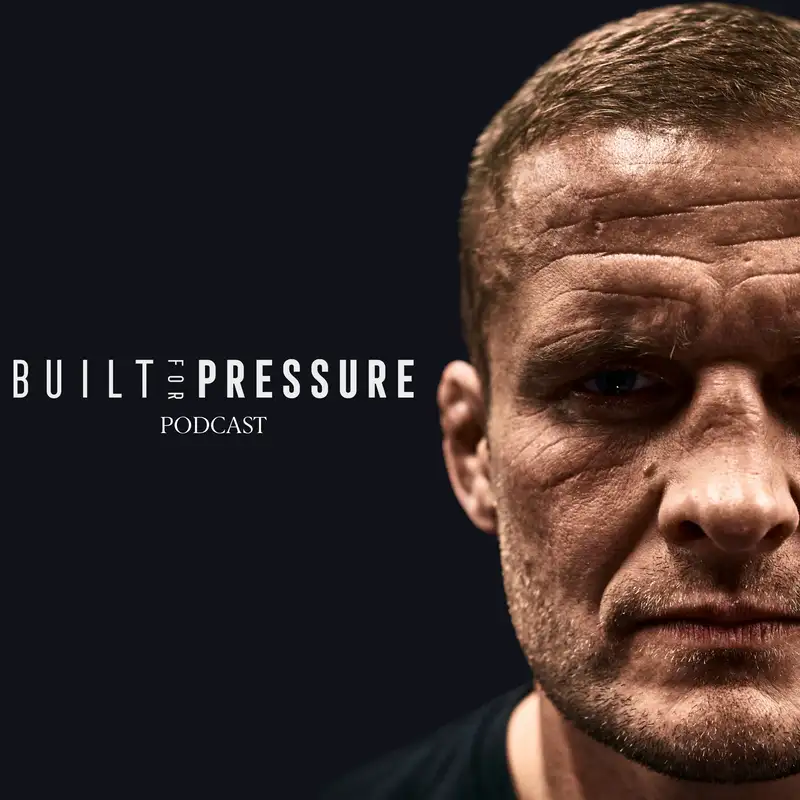
I Froze in the Biggest Game of My Career. Here Is Why.
/15:39/E102
Why do some leaders get sharper under pressure while others freeze?
Ten minutes to go. I was playing Bristol away in the B & I cup. I got the call to come off the bench.
"Just make it happen."
So I tried to make it happen. And I froze. I played safe. I played not to lose. I walked off knowing I had not done what I said I would do.
I see the same thing in boardrooms every week. Most CEOs and founders are fully capable. When they break, crumble or freeze under pressure, it is rarely a capability problem. It starts with physiology.
In this video I break down:
The stress performance curve, and where elite performance actually live
Why being overstimulated makes capable people play not to lose
Allostatic load, the compound interest stress builds on your body over time
What is quietly loading your system: poor sleep, constant digital noise, cognitive overload, professional visibility, time pressure, nutrition and environment
The baseline markers that tell you your load is too high.
The four mechanisms to fix it: lower your set point, raise your ceiling, manage the moment of contact, and recover properly.
What I should have done in that game, and how you apply it before your next big moment.
You cannot expand a system that has not been stabilised first.
Chapters 00:00 Why some people freeze under pressure 00:25 Bristol away: the game I froze 01:39 The stress performance curve 03:03 Playing not to lose 03:45 Allostatic load explained 04:22 What is loading your system 08:43 The markers your load is too high 09:20 Fix one: lower your set point 09:57 Fix two: raise your ceiling 11:23 Fix three: manage the moment of contact 13:05 Fix four: recovery 14:30 Physiology first, and what to watch next